Warning: This post is not vegetarian-friendly.
This post is meant as more of a guideline and less of a recipe. After reading, feel free to reach out with questions, comments, or suggestions that have helped you on the path to cooking your perfect steak.
Steak has always been a favorite of mine. It doesn’t take a lot of effort to make one, just timing and temperature consideration.
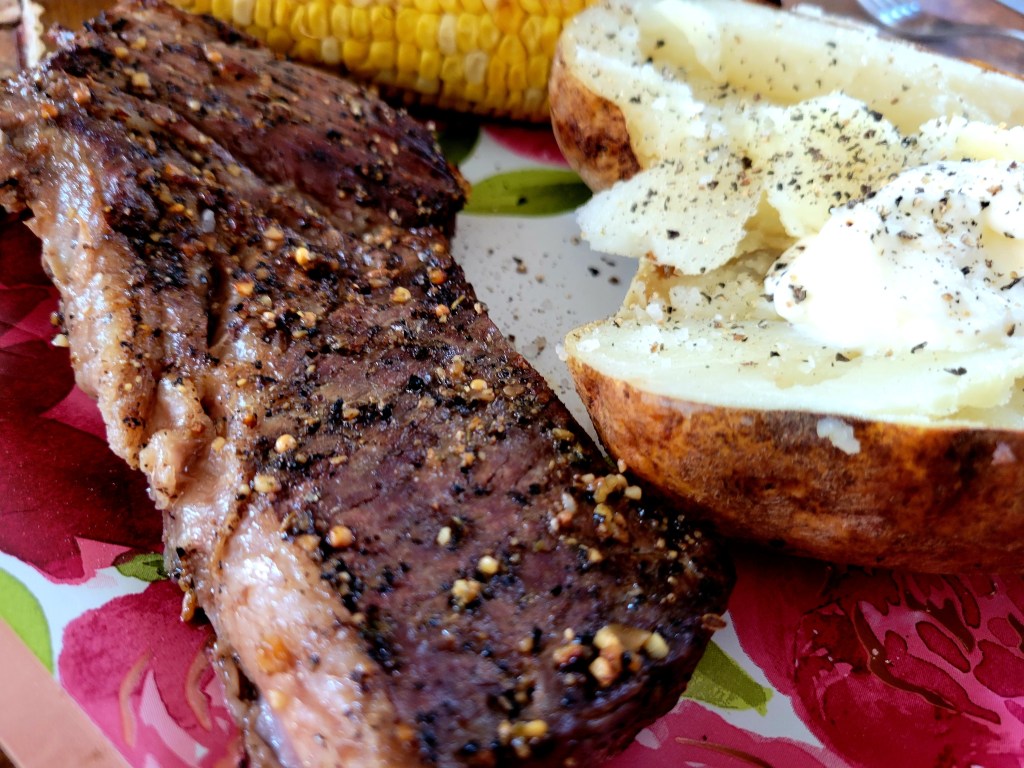
Okay, I mean there’s other variables to consider but the biggest mistakes I’ve seen or personally suffered through stem from heat settings and how long you cook your steak on either side.
For beginners, I highly recommend you make use of some important tools. An infrared thermometer will help you find the surface temperature of your grill or pan. A digital meat thermometer will help you find the internal temperature of your steak, which will help you early on to get used to the exact setting and time on your specific grill to make the steaks the way you like!
So where do we start? Let’s consider the cut. The type of steak you choose can impact how fast or slow you want to cook it, and at what heat. Generally speaking, you’ll cook at higher temps for shorter times and lower temps for longer.
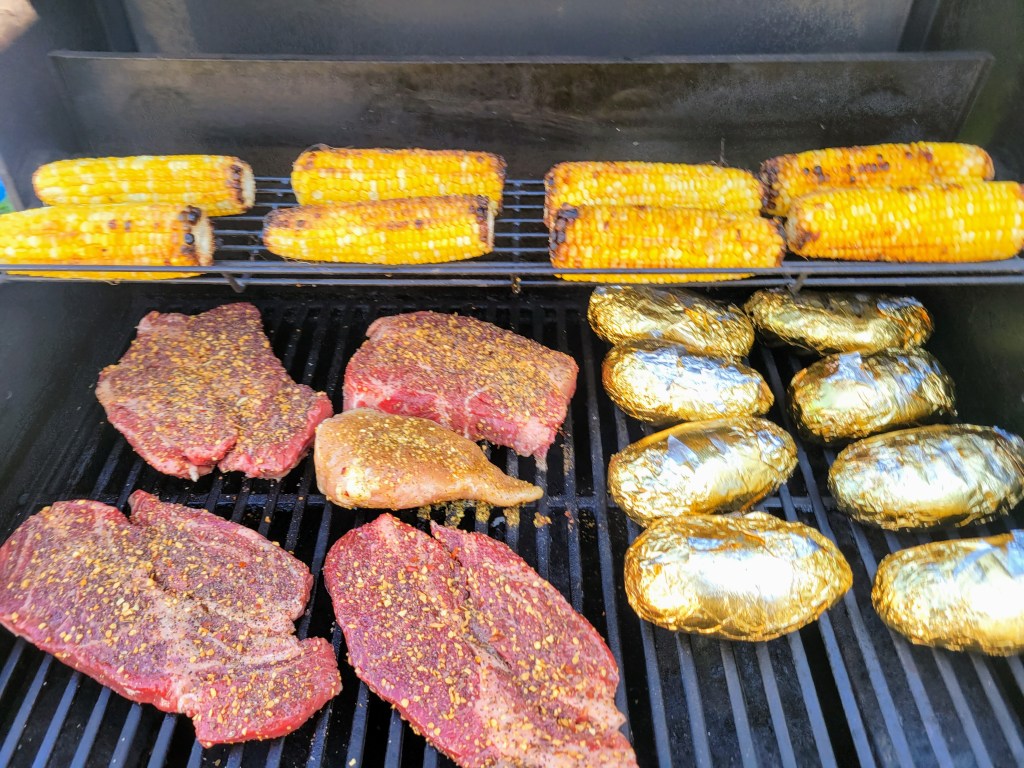
I went with chuckeye. Similar to a ribeye, they have a nice distribution of fat and are a flavorful but cheaper steak. Chuckeye is arguably a harder steak to cook right because it can have some gristle and larger pieces of fat throughout, but can be just as good as a ribeye if you’re careful and patient.
Fat is important here, because it helps keep the meat from drying out while cooking.
Cuts like sirloin and filet mignon are much leaner, and if cooked too long (there’s that timing variable), you’ll end up with a regrettably tough monstrosity that makes you wish you had just ordered pizza. We’ll touch on cooking filets in an upcoming post.
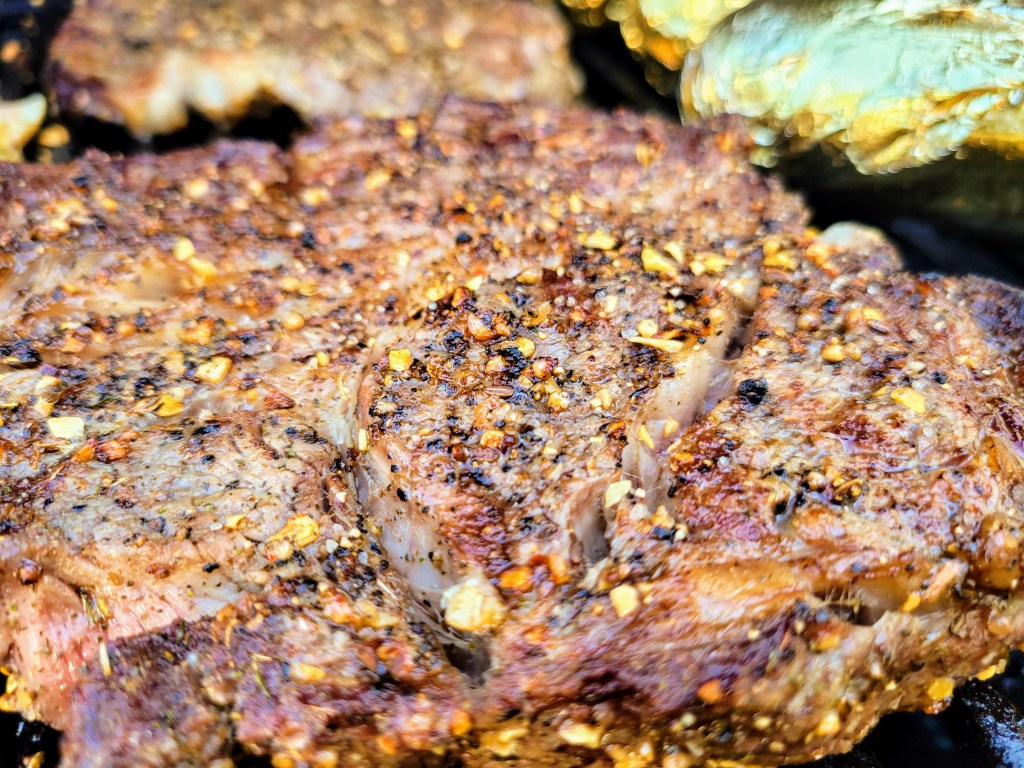
For fattier cuts like ribeye, chuckeye, and strip steak, you still have some risk. A dangerously vague comment I hear all the time is “cook it hot and fast!” But that is the number one way I see a perfectly solid steak turn into a brick of carbon and shame.
Fat means oil, and oil burns. You’ll notice in my close-ups above and below that there’s some darker, crispier parts. That’s what we call the Maillard Reaction, or caramelization. It’s that magical state of deliciousness where food and heat meld so eloquently that the sugars and proteins create this distinct flavor and outer texture.
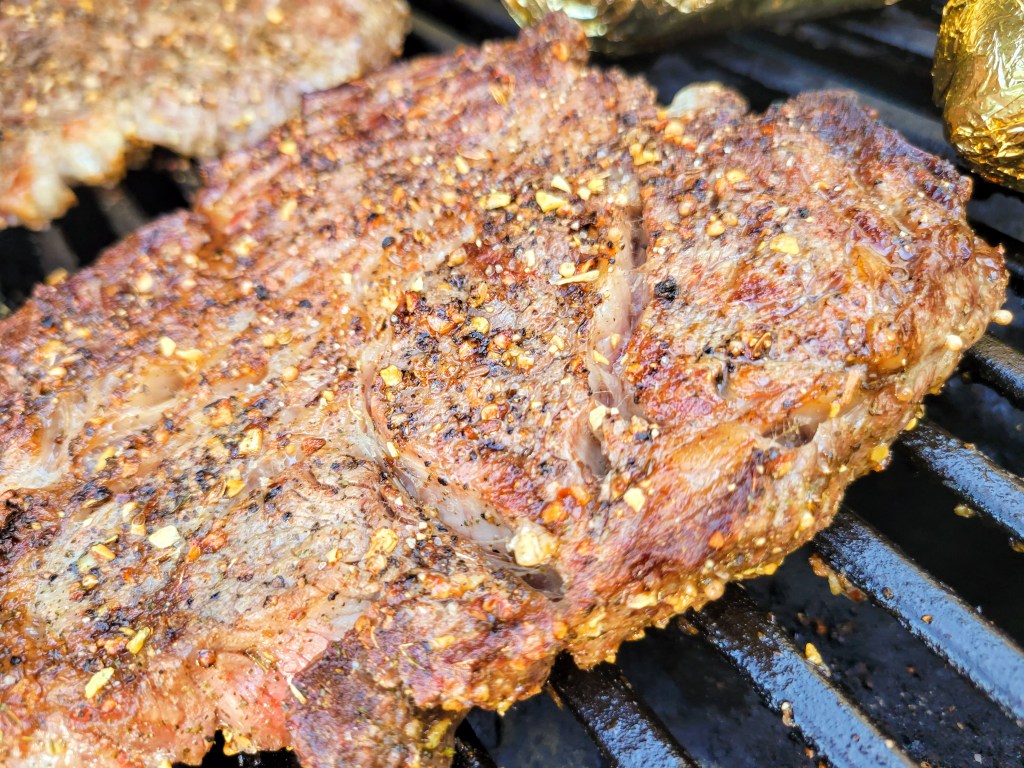
The steaks I used were about 1 inch thick. Another variable! That size helps us dictate our timing, which, in turn, helps us figure out our temp.
“But Bob, my grill has knobs, my stove too. How do I know what the temperature is?” This is the trickier part because temperature can vary between device, model, cooking surface, etc. depending on where you turn that knob to.
I start with medium-high, because, in most cases, your grill will get you to around 450°F at that setting, which is a good starting point for 1 inch steaks. Your cook time will land between 8 and 12 minutes (4-6 minutes per side).
Why the cook time variance? Because everyone likes their steak a little different. If you’re like me, you’ll order a steak or burger at a restaurant and when asked how you want it, you’ll respond with “as rare as they’re willing to make it.”
Most people like it between medium-rare and medium-well, and that time variance will get you there within a reasonable margin of edible. For medium-rare, you’ll want an internal temperature of ~130°F.
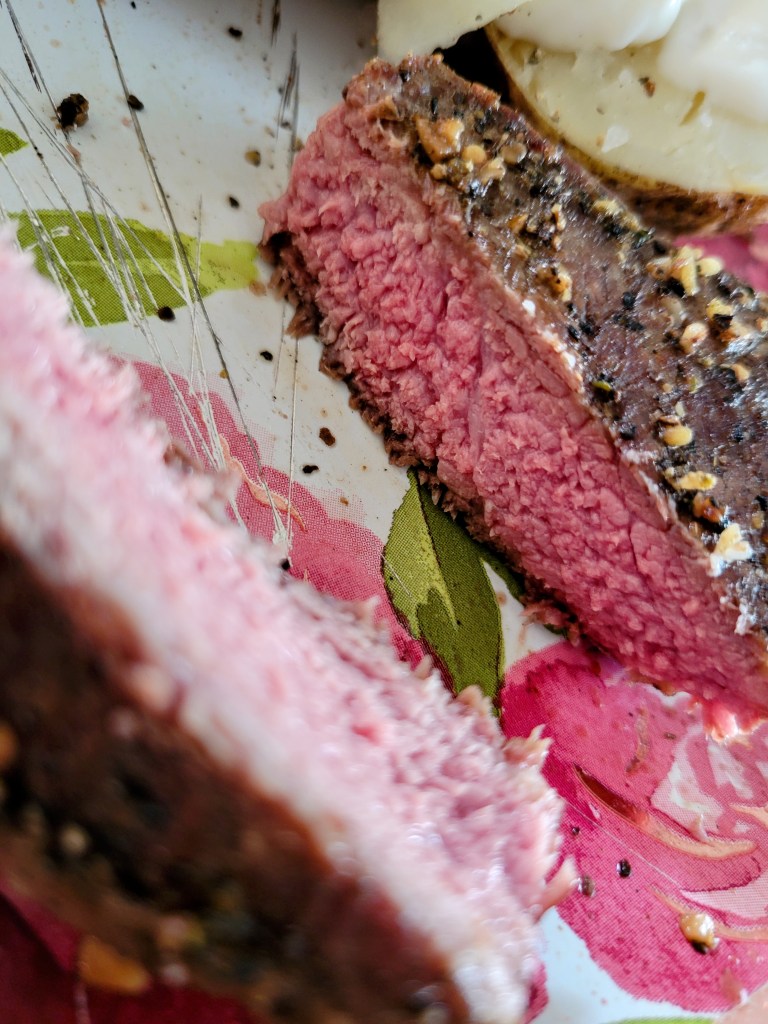
I cooked these steak for about 5 minutes per side, on medium-high heat, and let them rest for around 10-15 minutes under foil to keep them warm and let the juices redistribute.
If these steaks were, say, 2 inches thick, I would cook them for about 7-8 minutes per side and bring that temp down just a bit lower, to 425°F, to achieve that same medium-rare in a thicker cut.
On the other hand, if I was cooking skirt steak for fajitas I’d change things up. Those are usually a bit thinner than 1 inch, so I’ll go a little hotter (475°F) and a little faster (3 minutes per side).
For those who skipped the details and just want the fast and dirty quick start guide, start with 1 inch thick steaks with nice fat marbled throughout (ribeye, chuckeye, NY strip, porterhouse), kick your grill on to medium-high, rub some oil and seasoning of choice on, cook for about 5 minutes per side and see how it goes.
Don’t be discouraged if it comes out a little under done of overcooked. These guidelines work well for my grill, but you may need to tweak it for yours.
I’ve burned steaks to a crisp, undercooked chicken, and scorched eggs beyond recognition. I still do at times. But we learn through mistakes, so go make a steak and make another if it doesn’t go right. You’ll get the hang of it and be entertaining guests with your immaculate, curated steak cooking skills before long.
 Food Adventures with Bob